Head-to-head
Kia EV5 vs Kia EV9
At $56,770 the Kia EV5 undercuts the Kia EV9 by $40,230 (41%) — but does the premium deliver enough of an edge to justify itself? Here's how the two compare on price, range, charging, safety and warranty.
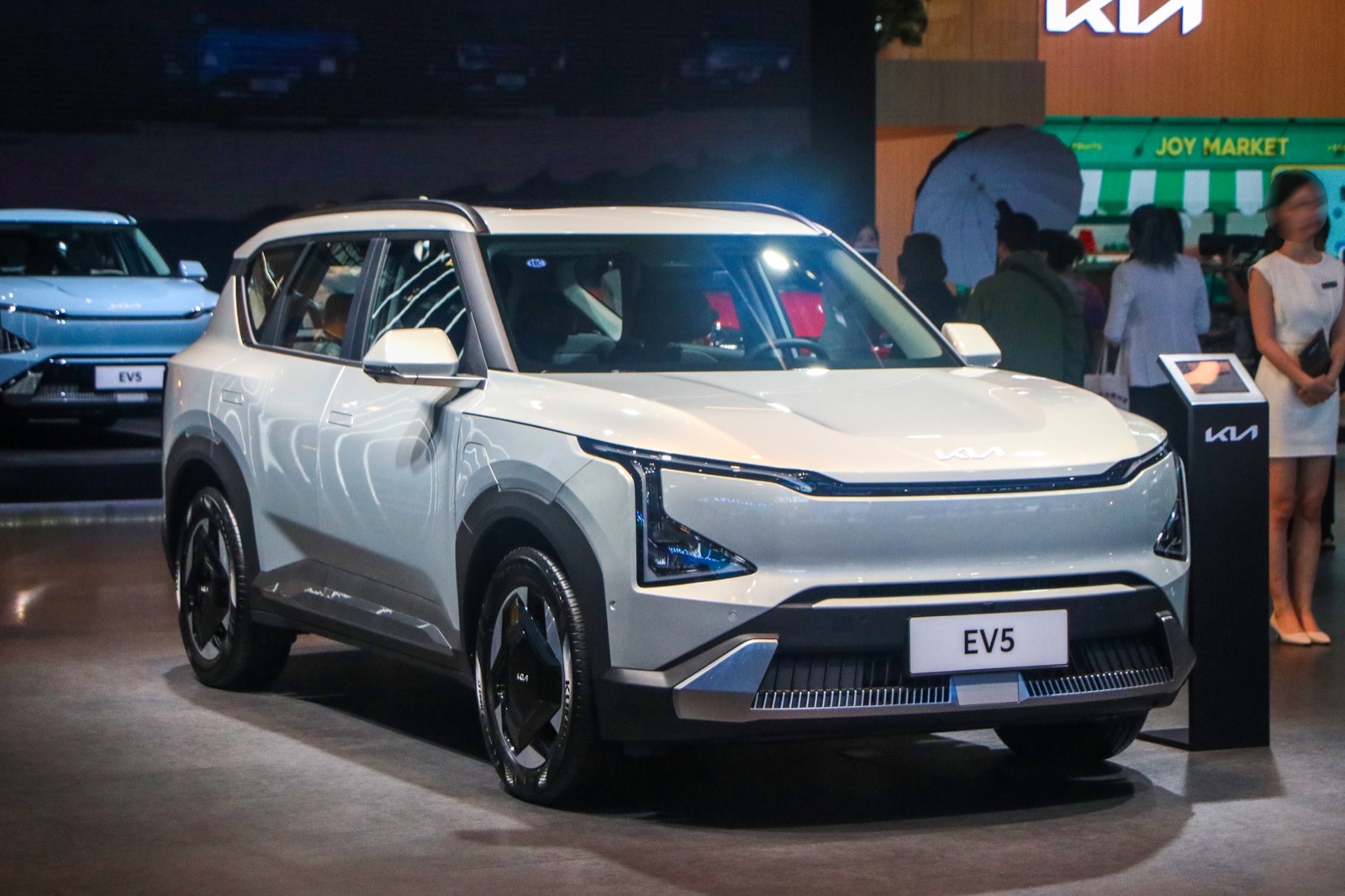
Option A · SUV
Kia EV5
The EV5 slots between the Niro EV and EV6 and targets family buyers with a roomy cabin, a 555 km long-range battery, and Kia's 7-year warranty. Built in China rather than Korea.
- From
- $56,770
- Range
- 555 km
- Battery
- 81.4 kWh
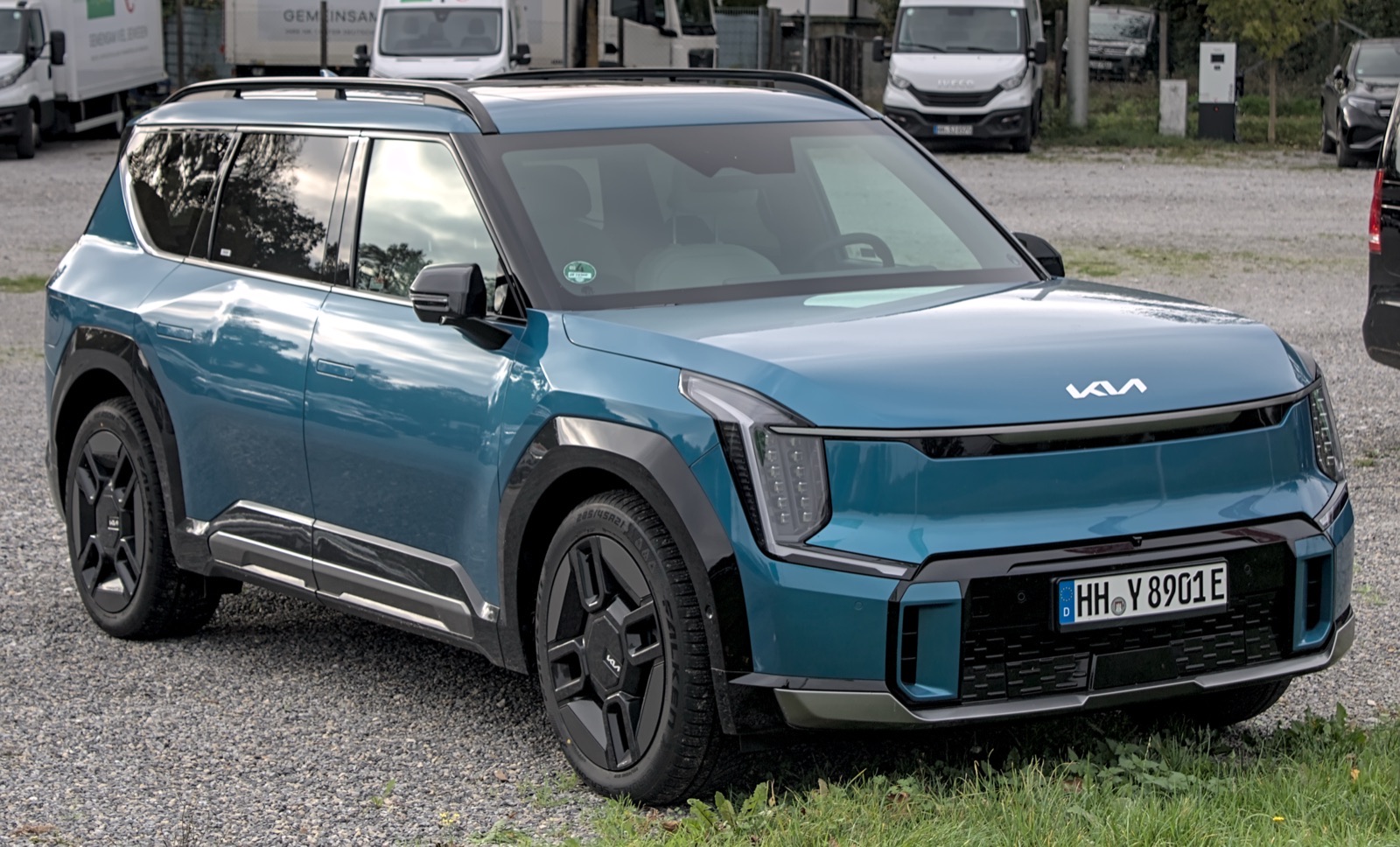
Option B · SUV
Kia EV9
Australia's first true 7-seat electric SUV at this price point. The EV9 brings genuine three-row practicality with the same 800V fast-charging platform as the EV6 and a square-jawed, distinctive design.
- From
- $97,000
- Range
- 563 km
- Battery
- 99.8 kWh
Key differences at a glance
The biggest material gaps between the Kia EV5 and Kia EV9, ranked by how much they're likely to matter day-to-day.
- 1
DC charging · advantage Kia EV9
The Kia EV9 accepts 93 kW more DC peak charging (233 vs 140 kW), meaning shorter road-trip stops.
- 2
Price · advantage Kia EV5
The Kia EV5 undercuts the Kia EV9 by $40,230 (41%) on starting price.
- 3
Battery · advantage Kia EV9
The Kia EV9 carries a 18.4 kWh larger battery (99.8 vs 81.4 kWh).
- 4
Boot · advantage Kia EV5
The Kia EV5 swallows 180 L more cargo with the rear seats up (513 vs 333 L).
- 5
Efficiency · advantage Kia EV5
The Kia EV5 is 3.7 kWh/100 km more efficient (16.5 vs 20.2), translating to cheaper running costs.
Spec for spec
Highlighted cells show the better number in each row.
Where the Kia EV5 wins
- ▸ Cheaper by $40,230
- ▸ Quicker 0–100 km/h (8.5s vs 9.4s)
Where the Kia EV9 wins
- ▸ 8 km longer WLTP range
- ▸ Faster DC charging peak (233 kW vs 140 kW)
Kia EV5
What we like
- ✓ 555 km long-range option is best-in-class
- ✓ Seven-year warranty across the line
- ✓ Spacious, well-finished interior
What we don't
- ✕ AWD performance variant not offered
- ✕ Slower 0-100 than direct rivals
- ✕ China origin matters to some buyers
Kia EV9
What we like
- ✓ True 7-seat layout with usable third row
- ✓ Fast 800V DC charging
- ✓ Strong towing capacity (up to 2,500 kg AWD)
What we don't
- ✕ Heavy kerb weight hurts efficiency
- ✕ Premium pricing for the top trims
- ✕ Tight boot with the third row deployed
Frequently asked: Kia EV5 vs Kia EV9
Quick answers to the questions cross-shoppers most often ask about this pair.
- Which is cheaper, the Kia EV5 or the Kia EV9?
- The Kia EV5 is the cheaper of the two — it starts at $56,770 versus $97,000 for the Kia EV9, a $40,230 difference. Prices shown are manufacturer recommended retail excluding on-road costs.
- Which has the longer driving range?
- The Kia EV9 has the longer WLTP-claimed range at 563 km, 8 km further than the Kia EV5's 555 km. Real-world range typically lands 10–20% below the WLTP figure depending on speed, terrain, climate and load.
- Which one charges faster on a DC fast charger?
- The Kia EV9 accepts a peak DC charging rate of 233 kW versus 140 kW for the Kia EV5. Peak rate only holds for a short window during the charging curve, so real-world 10–80% times often diverge less than the peak numbers suggest. Compatibility with 350 kW chargers depends on the vehicle's onboard architecture, not just the published peak.
- Which is quicker off the line?
- The Kia EV5 does 0–100 km/h in 8.5 seconds — 0.9 s quicker than the Kia EV9's 9.4 s. EV acceleration figures hold up at speed better than equivalent petrol cars because electric motors deliver peak torque instantly.
- Is the Kia EV5 better value than the Kia EV9?
- On paper the Kia EV5 is $40,230 cheaper, but the Kia EV9 edges ahead on most other measurable specs. Whether the saving justifies the gap depends on which features matter most to you, and how much weight you give to brand and dealer factors.
Which one should you buy?
The short version, based on where each car pulls ahead.
Choose the
Kia EV5
if…
- ✓ you want to save $40,230 on the sticker
- ✓ you regularly load it up (180 L more boot)
- ✓ you match the profile: families
Choose the
Kia EV9
if…
- ✓ you regularly do long road trips (faster DC peak)
- ✓ you match the profile: large families
Verdict reasoning is derived from published specs; brand preference, dealer experience and how a car drives are personal — always take a test drive before deciding.