Market data ·
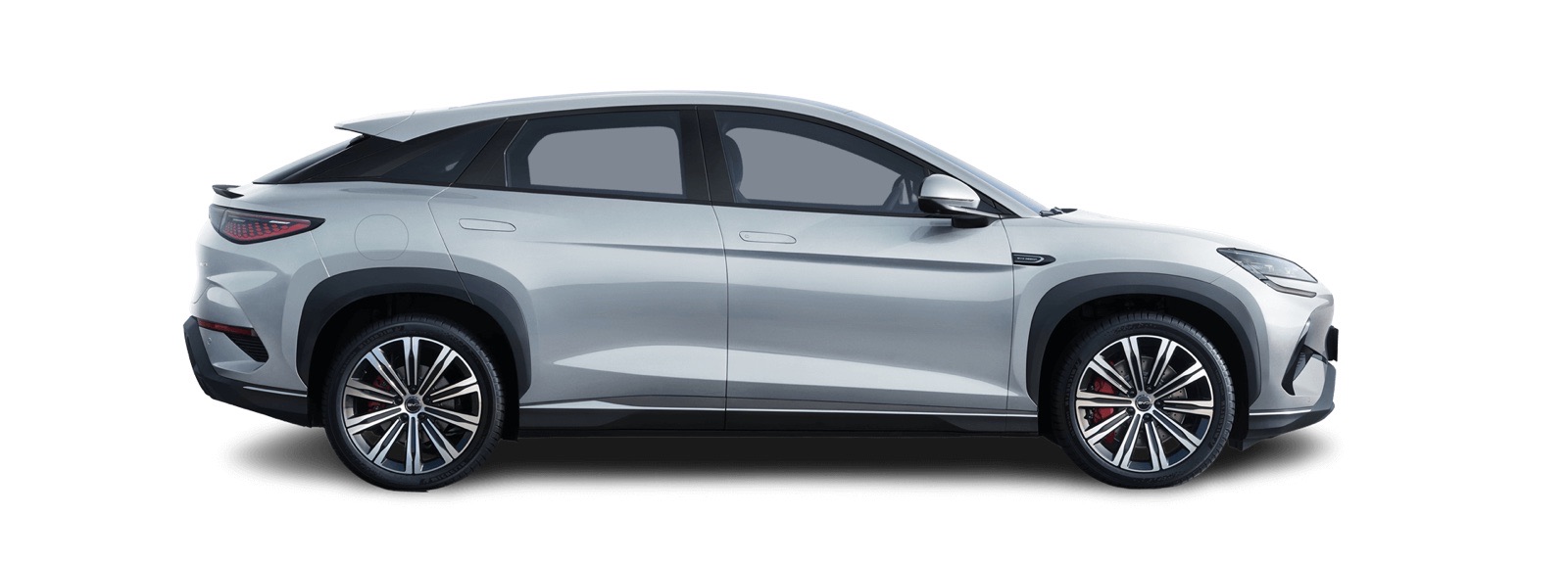
BYD Sealion 7 is now Australia's second best-selling EV — and only Tesla is ahead
FCAI March 2026 VFACTS data puts the BYD Sealion 7 at 1,970 units — second only to the Tesla Model Y, and a clearer signal than any Tesla price cut that the EV market has changed.
By EV Drives
The Federal Chamber of Automotive Industries’ March VFACTS release tells a simple story: the BYD Sealion 7 sold 1,970 units in March 2026, behind only the Tesla Model Y (2,818 units). The Sealion 7 went on sale in Australia in February 2025; thirteen months in, it’s already the country’s second best-selling electric vehicle.
That’s a faster ramp than any non-Tesla EV in Australian market history.
What the BYD Australia page actually says
A quick look at the Sealion 7 model page and BYD’s own specifications helps explain why it’s selling at this volume:
- Premium (RWD): 230 kW, 380 Nm, 0–100 km/h in 6.7 seconds, 482 km WLTP range, $54,990 before on-road costs.
- Performance (AWD): 390 kW, 690 Nm, 0–100 km/h in 4.5 seconds, 456 km WLTP range, $63,990 before on-road costs.
Both variants use the same 82.5 kWh BYD Blade battery — the same lithium iron phosphate (LFP) chemistry BYD uses across its range — with peak DC fast-charging at 150 kW. BYD claims a 10–80% top-up in 32 minutes. Vehicle warranty is six years / 150,000 km, with the battery warranty stretched to eight years / 160,000 km.
The Sealion 7 was tested by ANCAP in 2025 and scored five stars under the current protocol, with category scores of 87% (adult occupant), 93% (child occupant), 76% (vulnerable road user) and 78% (safety assist).
Why this is the real story, not the Tesla Model Y number
It’s easy to read the March VFACTS data as “Model Y stays on top” — and that’s literally true. The Model Y outsold the Sealion 7 by about 850 units. But Tesla has had the top spot for years; the Sealion 7 is one model from a brand that wasn’t selling cars in Australia five years ago, in only its second model year, already at #2.
Three structural factors are at play:
-
Price. The Sealion 7 Premium starts $4,000 below where the Tesla Model Y RWD has typically sat in the Australian market, with a longer vehicle warranty (6 years vs Tesla’s 4) and a longer battery warranty (8 years vs Tesla’s 8 — even).
-
The same Blade LFP chemistry the Atto 3 made familiar. BYD’s LFP packs are slower-charging than the nickel-based chemistries Tesla uses, but they’re widely regarded as the most thermally stable EV chemistry currently in production. For a household making its first EV purchase, that matters.
-
Distribution. BYD’s Australian dealer footprint has expanded sharply over 2024–2025. The Sealion 7’s growth curve tracks dealer additions almost more cleanly than it tracks anything else.
What the Sealion 7 doesn’t beat the Model Y on
A flat reading of the spec sheets favours the Model Y on two practical metrics:
- DC charging speed. Peak rate of 150 kW vs Tesla’s 250 kW Supercharger peak — and Tesla holds a non-trivial advantage on average rate across a 10–80% session, which is the metric that actually determines road-trip times.
- Supercharger access. Despite Tesla opening its Supercharger network to non-Tesla cars via CCS adaptor, the experience is still smoothest with a Tesla. For drivers regularly covering long distances, that integration is worth real money.
If you don’t road-trip, the Sealion 7 closes a lot of the gap.
What to watch in the next two VFACTS releases
The two questions that will determine whether March was a step change or a peak:
- April and May volumes for both the Sealion 7 and the Atto 3. If they hold, BYD will likely take the top BEV-by-brand position from Tesla by mid-year.
- Tesla’s response. Tesla cut Model Y pricing late in 2025; another cut, or a meaningful refresh, would be the obvious counter. As of this article, nothing has been announced for the Australian market.
Bottom line
The Sealion 7 isn’t a Model Y killer in absolute volume — Tesla is still on top. But the gap is narrower than it has ever been, and the trend line is going one way. For a buyer comparing Model Y money against an alternative, the Sealion 7 is now the cross-shop that has the broadest body of supporting evidence — five-star ANCAP, manufacturer-published 482 km WLTP, $54,990 from-price, 8-year battery warranty. Whether that’s enough to overcome Tesla’s Supercharger advantage depends on how you actually use the car.