News ·
Kia EV9 safety: what the ANCAP scores actually reveal about big family EVs
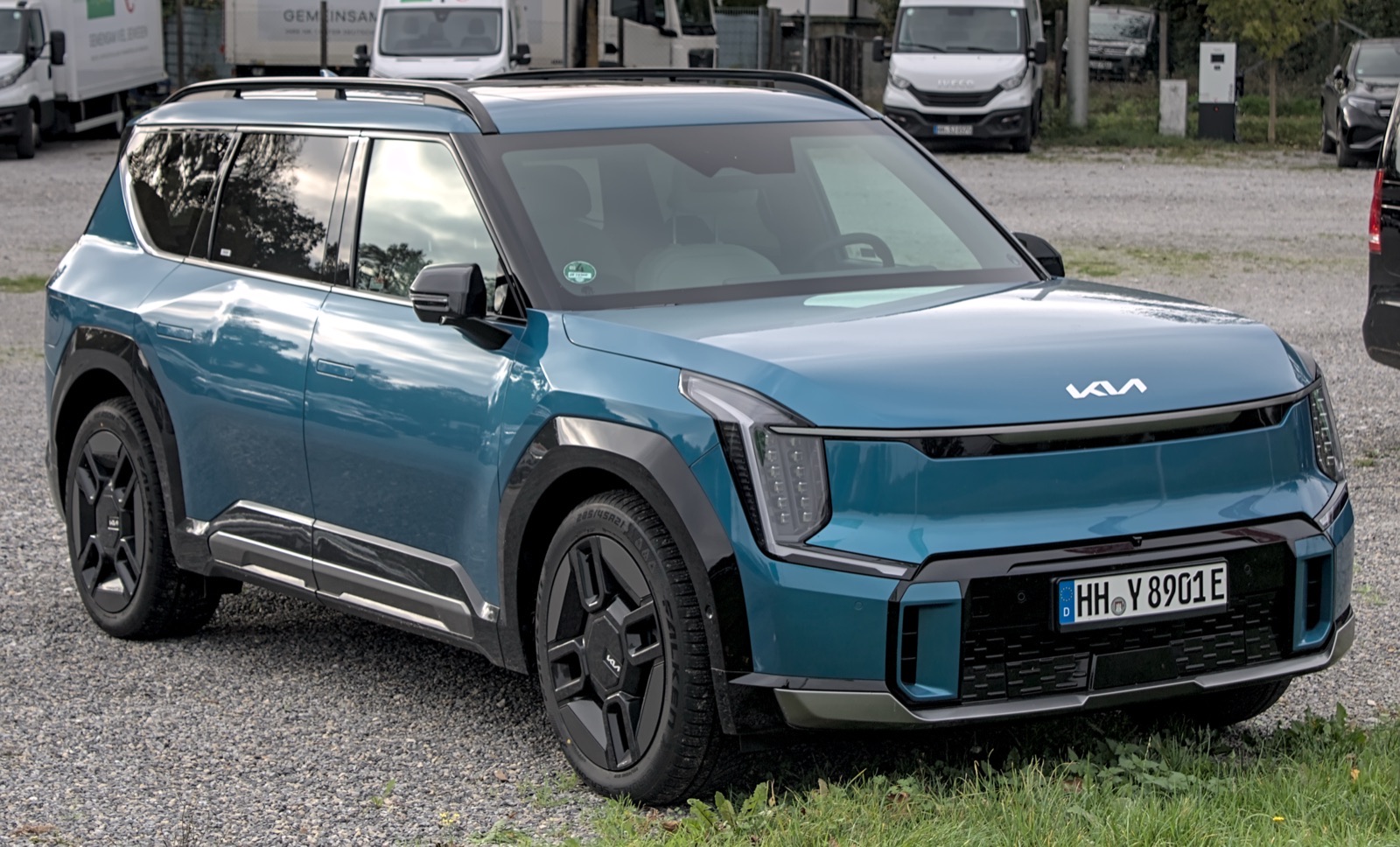
The Kia EV9 carries a 5-star ANCAP rating from 2023 — but the underlying category scores tell a more nuanced story about safety in large, heavy three-row EVs.
By EV Drives
The Kia EV9 was tested by ANCAP in 2023 and scored five stars under the 2023–2025 protocol. With sales of the EV9 continuing to grow in 2026 (and with families increasingly cross-shopping seven-seat EVs against three-row petrol SUVs), the ANCAP result is worth looking at properly — because the category scores tell a more nuanced story than the star count alone.
The actual numbers
Per ANCAP’s published test result:
- Adult Occupant Protection: 84% (33.65 / 40 points)
- Child Occupant Protection: 87% (42.65 / 49 points)
- Vulnerable Road User Protection: 76% (48.42 / 63 points)
- Safety Assist: 85% (15.43 / 18 points)
Five stars across the board, and a solid result by any 2023 standard. The most interesting score, though, is the lowest one.
Vulnerable road users — the score nobody talks about
Vulnerable Road User Protection (VRU) is the category that measures how well a vehicle protects the people outside it — pedestrians, cyclists, motorcyclists — when there’s a collision. The EV9’s 76% score is solid in absolute terms but is the lowest of its four category scores, and reflects a structural challenge for heavy three-row EVs.
A few things drive VRU scoring:
- Bonnet design and clearance to allow some deformation when a pedestrian’s head strikes the front of the vehicle.
- A-pillar design to reduce blind spots and head-impact risk.
- Active hood / pop-up bonnet systems that some manufacturers fit.
- Autonomous Emergency Braking (AEB) with pedestrian and cyclist detection across day, night, and reversing scenarios.
The EV9 clearly does well on the AEB-detection side (it’s one of the safety-assist features the high Safety Assist score reflects). The VRU score deduction is more likely about the inherent geometry of a 5+ metre, 2.5+ tonne vehicle with a tall bonnet.
For buyers comparing the EV9 to smaller EVs or to traditional three-row petrol SUVs, this is the trade-off: more cabin space, more weight, harder to keep pedestrian-impact scores up. ANCAP’s 76% is a good result by 2023 standards, but it isn’t the 90%+ score you can sometimes see on smaller, lower-bonnet vehicles.
Why the test year matters
ANCAP retires star ratings after six years, and tightens its protocols every few years. The EV9 was tested under the 2023–2025 protocol — the current protocol at the time, and current for most of 2026. The result remains active.
But: under the next protocol (2026 onwards), several of the test criteria — particularly around child occupant protection in side impacts and AEB performance — get harder. If the EV9 were retested under the 2026 protocol, the underlying scores wouldn’t necessarily be the same. Buyers should view ANCAP ratings as a snapshot under the protocol of the test year.
What ANCAP doesn’t tell you
Three real-world safety questions the test result doesn’t answer:
- Battery integrity in serious crashes. ANCAP’s protocol checks for post-impact battery containment, but only emergent fleet data over years of real-world use shows whether a particular EV platform has a meaningful fire risk. Kia’s E-GMP platform has now accumulated significant kilometres globally without unusual fire data — but this remains an area to watch.
- Insurance loss data. ANCAP doesn’t measure repairability. Heavy EVs tend to be expensive to repair after even moderate damage; insurance premiums and write-off thresholds catch up over time.
- Long-term driver behaviour effects. Larger, heavier vehicles change driver attention and risk perception. ANCAP doesn’t try to capture this.
Bottom line
The EV9’s 5-star ANCAP rating is genuinely earned — there are no soft scores in the four categories, and the result holds up against the current generation of three-row EVs. The 76% VRU score is the most informative number on the page: it tells you what you should expect when you put a 2.5-tonne, 5-metre vehicle through pedestrian-impact testing, and it confirms that Kia’s AEB suite is doing the work it needs to do.
For families shopping for a seven-seat EV, the EV9 remains one of the safer options on the market. For everyone outside the EV9, the VRU score is the number that matters most.
See the full Kia EV9 model page for specs, charging, range and warranty.